An Overture
Arles is a sun-bleached Provençal town on the Rhône where Roman antiquity and the legacy of Vincent van Gogh coexist. Once a major Roman city, it preserves an extraordinary ensemble of ancient monuments — an amphitheatre, theatre, baths, and necropolis — collectively a UNESCO World Heritage Site. Van Gogh produced some 300 works here in 1888–89, and the town's light and scenes still draw artists and photographers; it hosts the renowned Rencontres d'Arles photography festival each summer. Compact, walkable, and atmospheric, Arles is the natural base for exploring the wild Camargue delta and the Alpilles, and connects easily by train to Avignon, Nîmes, and Marseille.
Top Things to Do
Arènes d'Arles (Roman Amphitheatre)
A 1st-century arena still used for events and Camargue-style bullfighting; climb the towers for rooftop views.
Insider tip — A combined "Liberté/Avantage" pass covers multiple monuments and museums — best value.
Espace Van Gogh
The former hospital where Van Gogh recovered, its courtyard garden recreated to match his painting.
Insider tip — Free to enter the courtyard.
Fondation Vincent van Gogh
Contemporary art space dedicated to Van Gogh's legacy and influence (note: it holds rotating exhibitions, not a permanent collection of his major works).
Musée Départemental Arles Antique (Musée Bleu)
Superb archaeology museum with mosaics, sarcophagi, and a Roman barge recovered from the Rhône.
Getting there — ~20 min walk southwest of center along the river, or short bus.
Cryptoportiques & Thermes de Constantin
Underground Roman galleries and riverside imperial baths.
Église Saint-Trophime
Romanesque church with a magnificent carved portal and cloister.
Walking Tours
Roman Arles & the Rhône
A self-guided "Van Gogh trail," marked by panels showing his paintings at the spots where he set up his easel, links the Café Terrace (Place du Forum), the Espace Van Gogh courtyard, the Rhône quays (Starry Night over the Rhône), and the Alyscamps necropolis. Combine it with a Roman-monuments loop through the amphitheatre, theatre, forum, and Saint-Trophime. The compact center makes the full circuit a 2–3 hour walk; the tourist office sells a detailed Van Gogh map.
Arènes d'Arles amphitheatre → Théâtre Antique → Place de la République (Saint-Trophime) → Cryptoportiques du Forum → Place du Forum (Café Van Gogh) → Espace Van Gogh → Quai du Rhône (Starry Night) → Les Alyscamps necropolis lane
Day Trips & Beyond
The Camargue
Europe's great river delta of pink flamingos, white horses, black bulls, salt flats, and rice fields. Getting there: Seasonal "Envia" buses (line A50) toward Saintes-Maries-de-la-Mer; organized 4x4 safaris and horse rides bookable in Arles. A full day.
SearchSaintes-Maries-de-la-Mer
Camargue's pilgrimage seaside town with a fortified church and broad beaches; reachable by bus.
SearchLes Baux-de-Provence & Carrières des Lumières
Dramatic hilltop ruin and immersive light shows in old quarries. Getting there: Seasonal shuttle bus from Arles; otherwise organized tour, as service is limited.
SearchSaint-Rémy-de-Provence
Elegant Alpilles town with the Saint-Paul asylum (where Van Gogh stayed) and Roman Glanum. Getting there: Regional bus from Arles.
SearchHidden Gems
Les Alyscamps
A haunting Roman-Christian necropolis lined with stone sarcophagi and a leaning avenue of trees, painted by Van Gogh and Gauguin; usually serene.
SearchLUMA Arles
Frank Gehry's twisting, shimmering aluminium tower anchors a major contemporary arts campus in the former railyard (Parc des Ateliers), with galleries, gardens, and a viewing terrace.
Getting there — Short walk south of the arena.
SearchRencontres d'Arles (July–September)
World-class photography festival filling venues across town.
SearchPlace du Forum at dusk
The yellow café façade evoking Van Gogh's "Café Terrace at Night" is touristy but iconic.
SearchFood & Dining
Pair with Costières de Nîmes and Camargue wines.
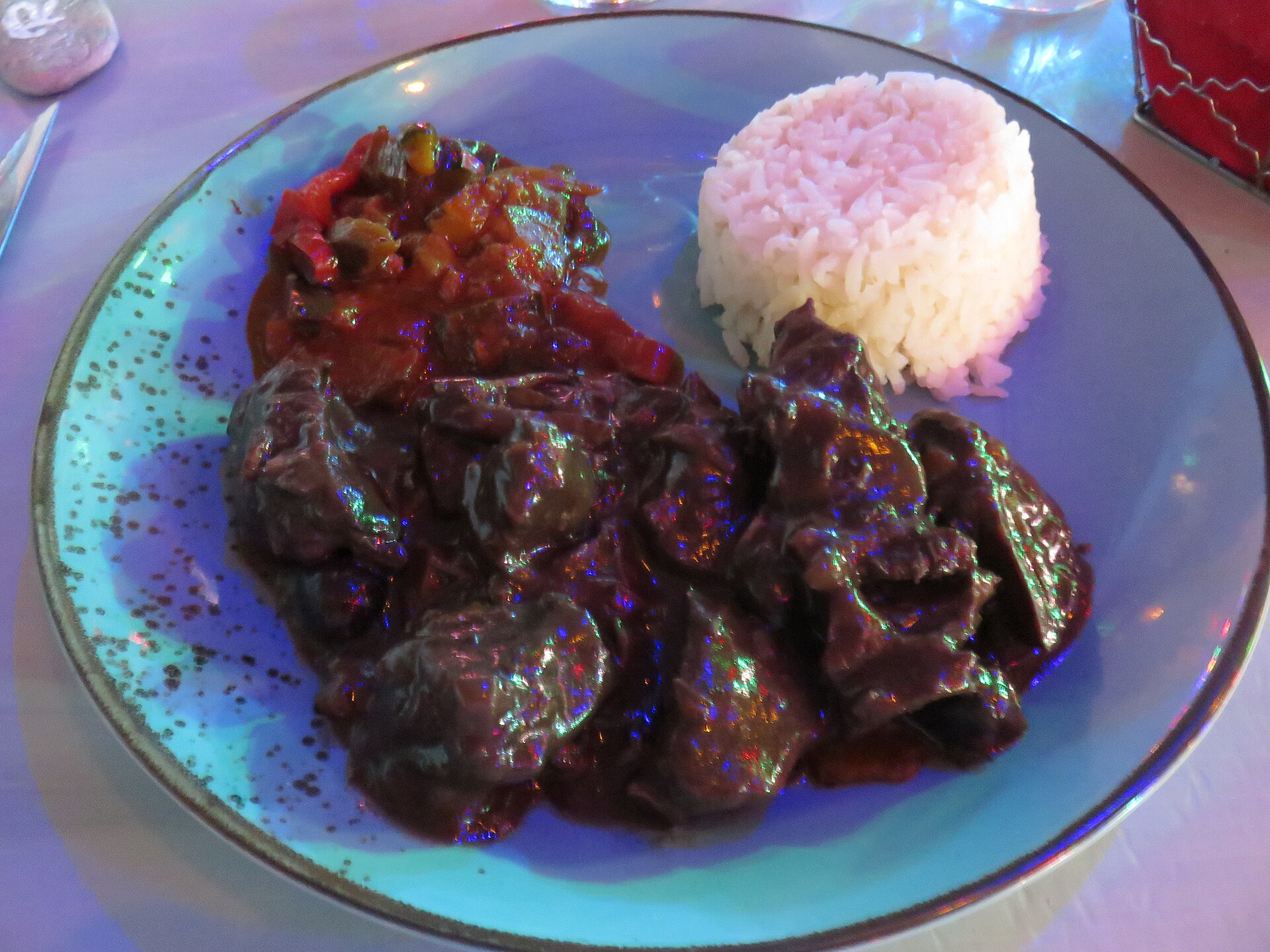
Arles sits between Provence and the Camargue, so menus feature gardianne de taureau (Camargue bull stew), Camargue red rice, locally raised beef, and fleur de sel from the salt pans. The Saturday market (and Wednesday market) is excellent for cheese, olives, sausage, and produce. Place du Forum and the lanes around it offer terrace dining; venture into smaller streets for better-value bistros.
Where to Stay
Each shaded circle marks one of the areas below, in its banner colour — tap a circle to open it in Google Maps.
Getting around — The center is small and entirely walkable; no transport needed in town.
Practical Notes
Getting There & Around
- Getting in (without a car): Arles station has frequent TER trains to Avignon (~20 min), Nîmes (~20 min), and Marseille (~1 hr); TGV connections via Avignon or Nîmes. Buses serve the Camargue and Alpilles.
- Getting in (with a car): N113/A54; park around the boulevards ringing the old town.
- Getting around: On foot — the center is tiny. Local "Envia" buses reach the archaeology museum and run seasonal services to the Camargue.
- Tips: A car helps for deep Camargue and Alpilles exploration but isn't essential — seasonal buses and organized tours cover the highlights. Carless travelers should time visits to the Camargue with bus schedules or join a 4x4 safari.
Good to Know
- Buy the combined monuments pass at your first stop to save money and queueing.
- Many Camargue buses run seasonally and infrequently — check schedules in advance.
- Summer is hot; the Rencontres festival makes July–August busy and pricier.
- Bring insect repellent for the Camargue marshes; the mistral can be fierce.
- Bullfighting events at the arena are seasonal and culturally divisive — be aware before booking.
Notable Insights
Etiquette & Culture
- Arles is laid-back and southern; markets are social events — arrive mid-morning. Camargue traditions (gardians, horses, bulls) are a living culture, not just spectacle.
Budget
- Cheap — market picnics, the Espace Van Gogh and Alyscamps are low-cost. Mid — bistros off Place du Forum. Luxury — designer hotels tied to the LUMA arts scene.
Timing
- Visit the amphitheatre early; the Van Gogh trail is best in soft morning or evening light. Camargue flamingos are most visible spring and autumn.
The Standout
- Standing where Van Gogh painted, with his canvas reproduced on the spot, is a genuinely moving way to read the town.